Contact Us
Overview

SmartDV’s MIPI CSI-2 Receiver IP is a silicon-proven, high-performance camera interface solution engineered for SoC designs requiring reliable, high-bandwidth image data reception across mobile, automotive, AI/ML, industrial, and medical imaging applications. Fully compliant with MIPI CSI-2 v4.2, MIPI D-PHY v3.0, and MIPI C-PHY v3.1, it delivers complete receiver-side CSI-2 functionality with support for both D-PHY and C-PHY physical layers, enabling data rates up to 9 Gbps per lane on D-PHY and up to 3 Gsps per trio on C-PHY.

Designed to address the full breadth of modern imaging requirements, the IP supports an extensive pixel format library spanning RAW, RGB, and YUV data types, up to 32 interleaved virtual channels on C-PHY, multi-lane configurations up to 8 lanes on D-PHY, and advanced features including LRTE, Alternate Low Power mode, data descrambling, and deskew mechanisms. Its comprehensive error detection and correction capabilities including 6-bit ECC for packet headers and 16-bit checksum for active data make it a robust, production-ready solution for the most demanding camera subsystem designs.

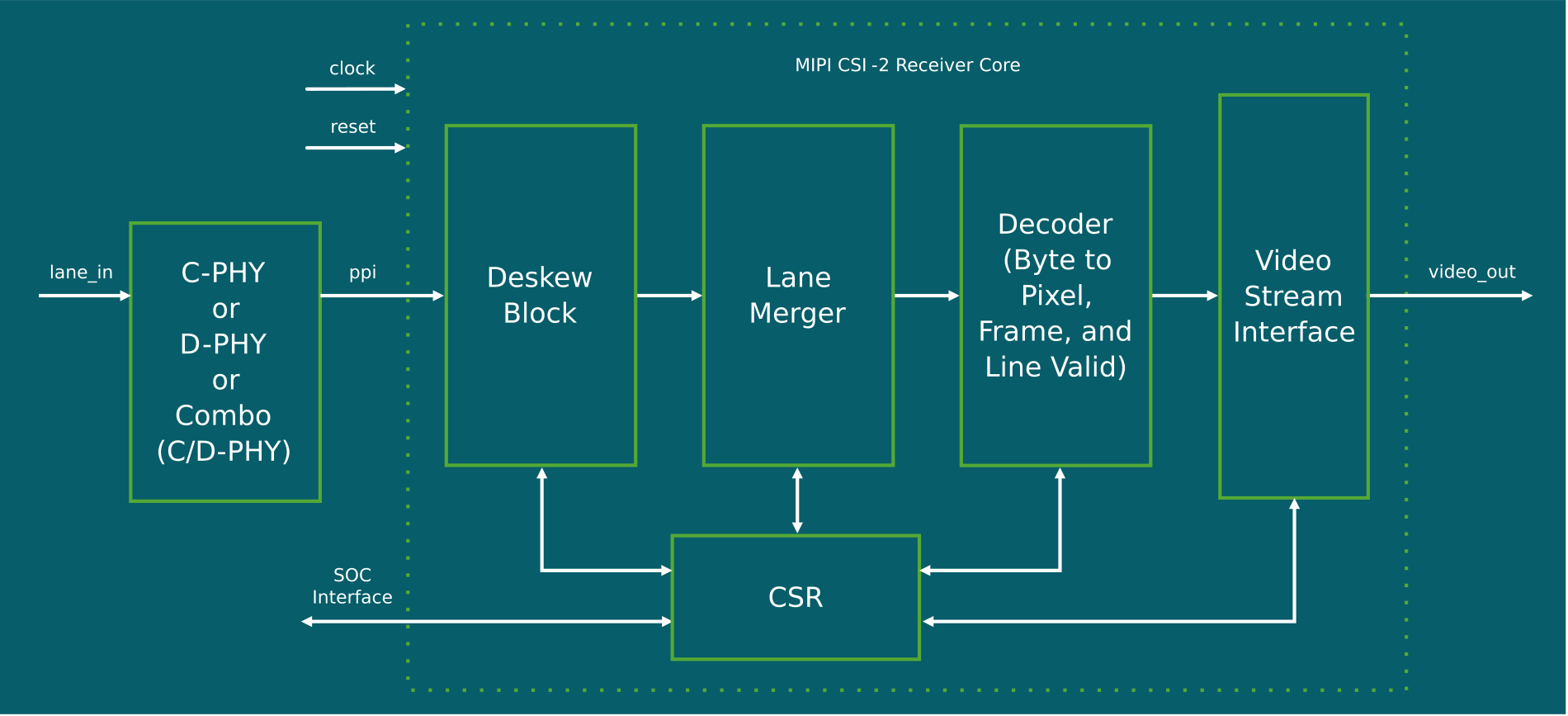
Built for design flexibility and silicon efficiency, the IP core is highly configurable for both ASIC and FPGA implementations, with a strong focus on area optimization, power management, and peak performance. Its PPI interface for seamless C-PHY and D-PHY integration, pixel-level ISP interface with HSYNC, VSYNC, DATA, and DATA VALID signals, and programmable synchronization and interrupt events enable fast integration and confident design bring-up across a wide range of process nodes and imaging applications.
Request Data Sheet
MIPI CSI-2 Receiver
Benefits
  • Full MIPI CSI-2 Receiver Functionality – Complete receiver-side implementation per MIPI CSI-2 v4.2 with support for both MIPI D-PHY v3.0 and MIPI C-PHY v3.1 physical layers
  • High-Speed Multi-Lane Support – Up to 8 lanes on D-PHY at up to 9 Gbps per lane and up to 4 trios on C-PHY at up to 3 Gsps per trio for maximum imaging bandwidth
  • Extensive Virtual Channel Support – Up to 16 interleaved virtual channels on D-PHY and 32 on C-PHY with data type and virtual channel interleaving
  • Comprehensive Pixel Format Support – RAW6 through RAW24, RGB444/555/565/666/888, YUV422/YUV420 in 8-bit and 10-bit, legacy YUV420, 8 user-defined data types, and generic 8-bit long packets
  • Advanced Signal Integrity – Data descrambling, deskew mechanism for lane synchronization, Alternate Skew Calibration, and continuous and non-continuous clock mode support
  • Robust Error Management – 6-bit ECC for 1-bit error correction and 2-bit error detection in packet headers, 16-bit checksum for active data error detection, and full protocol decoding level error support
  • Advanced Power and Efficiency Features – Latency Reduction and Transport Efficiency (LRTE), Alternate Low Power (ALP) mode, High Speed and Escape Mode (LPDT and ULPS) reception
  • ISP Integration Ready – Pixel-level interface to ISP with HSYNC, VSYNC, DATA, and DATA VALID signals with programmable synchronization and interrupt events
  • RAW Data Compression – Compression support for RAW data types for bandwidth-efficient image transport
Compliance and Compatibility
  • Fully compliant with MIPI CSI-2 v4.2; backward compatible with CSI-2 v3.0, v2.1, v2.0, v1.3, v1.1, and v1.0
  • Compliant with MIPI D-PHY v3.0; backward compatible with D-PHY v2.1, v2.0, and v1.2
  • Compliant with MIPI C-PHY v3.1; backward compatible with C-PHY v2.0 and v1.2
  • Configurable SoC interface supporting PPI, AXI, APB, and custom wrappers for seamless integration
  • Compatible with ASIC and FPGA design flows across leading foundry process nodes
  • Compatible with all major EDA synthesis, simulation, and linting flows

Request Datasheet